
Introduction
Cloud computing, commonly known as the cloud, has become one of the most important technologies of the digital age. It has changed the way people store data, run software, and manage business operations. Instead of depending on physical computers or local servers, cloud computing allows users to access data and applications through the internet. This approach provides convenience, flexibility, and cost efficiency for individuals as well as organizations.
In today’s fast-moving world, businesses require systems that are reliable, scalable, and easy to manage. Cloud computing fulfills these needs by offering resources on demand. From small startups to large enterprises, almost every organization now relies on cloud services in some form.
What Cloud Computing Means
Cloud computing is a technology model where computing resources such as storage, processing power, databases, and software are delivered through the internet. Users do not need to install heavy software or maintain expensive hardware. Everything is managed by cloud service providers, allowing users to focus on their work rather than technical infrastructure.
The cloud works through a network of powerful servers located in data centers around the world. These servers store data, run applications, and handle processing tasks. When a user accesses a cloud service, their request is handled by these remote servers, which send the required data back through the internet.
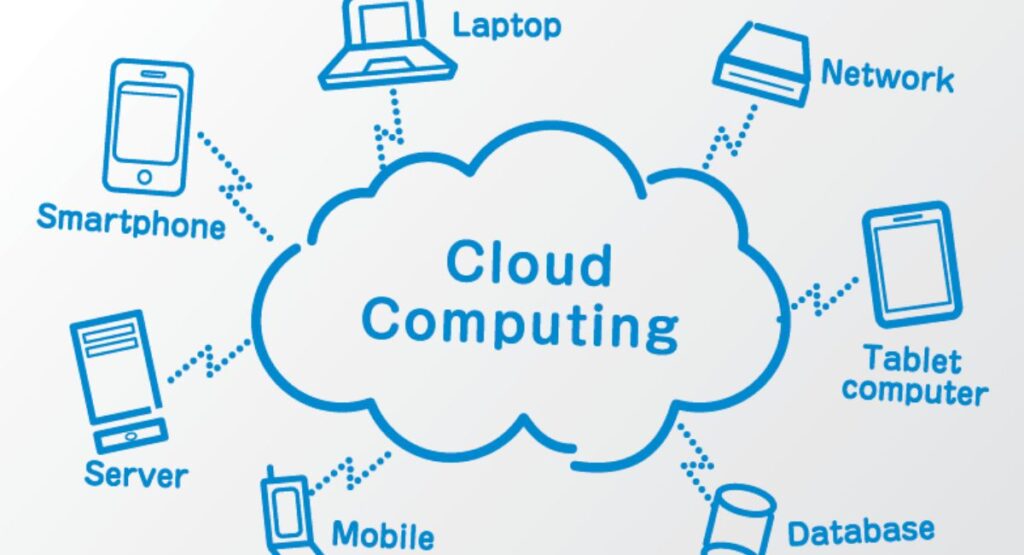
How Cloud Computing Works
Cloud computing is based on virtualization technology. Physical servers are divided into multiple virtual machines, allowing better use of resources. These virtual systems can be created, modified, or removed according to demand.
When a user uploads data or runs an application, the cloud system automatically allocates resources to handle the task. If demand increases, additional resources are assigned. When demand decreases, unused resources are released. This dynamic management ensures efficiency and consistent performance.
Types of Cloud Services
Cloud services are generally divided into three main categories. Each type serves different needs and users.
| Cloud Service Type | Description | Common Use |
|---|---|---|
| IaaS | Provides virtual servers, storage, and networking | System administration |
| PaaS | Offers development platforms and tools | App development |
| SaaS | Delivers ready-to-use software online | Daily business tasks |
Infrastructure as a Service allows users to build their own systems on virtual infrastructure. Platform as a Service supports developers by providing tools and environments. Software as a Service gives users direct access to applications without installation.
Advantages of Cloud Computing
One of the biggest benefits of cloud computing is cost savings. Organizations no longer need to invest heavily in hardware or maintenance. Instead, they pay only for the resources they use.
Cloud computing also improves flexibility. Users can access data from anywhere using any internet-enabled device. This supports remote work and global collaboration. Additionally, cloud systems provide high availability and data backup, reducing the risk of data loss.
Another major advantage is scalability. Businesses can easily expand or reduce resources based on their needs, making the cloud ideal for growing companies.
Security and Reliability
Many people worry about data security in the cloud, but modern cloud platforms use advanced protection methods. Data encryption, secure access controls, and continuous monitoring are standard practices.
Cloud providers also maintain multiple backups and disaster recovery systems. This means data remains safe even if one server fails. In many cases, cloud security is stronger than traditional local systems.
Uses of Cloud Computing in Real Life
Cloud computing is used in almost every industry today. Businesses use it for data storage, customer management, and online services. Educational institutions rely on the cloud for virtual classrooms and learning platforms.
Healthcare organizations use cloud systems for patient records and telemedicine. Financial institutions depend on the cloud for secure transactions and fraud detection. Entertainment platforms use cloud infrastructure to deliver streaming services to millions of users worldwide.
Challenges of Cloud Computing
Despite its benefits, cloud computing also has some challenges. Dependence on internet connectivity is a major concern. Without stable internet, access to cloud services becomes difficult.
Another challenge is cost management. If resources are not monitored properly, expenses can increase unexpectedly. Data privacy and compliance regulations must also be carefully managed, especially for sensitive information.
Future of Cloud Computing
The future of cloud computing looks very promising. Technologies like artificial intelligence, machine learning, and big data analytics are increasingly integrated into cloud platforms. Edge computing is also growing, allowing data processing closer to users for faster performance.
Cloud services are becoming more environmentally friendly through energy-efficient data centers. As technology advances, cloud computing will continue to evolve and play an even greater role in digital transformation.
Conclusion
Cloud computing has revolutionized the way digital systems operate. By providing flexible, scalable, and cost-effective solutions, it has become an essential part of modern life. While challenges such as security and cost control exist, the benefits far outweigh the drawbacks.
As businesses and individuals continue to rely on digital technologies, cloud computing will remain a powerful tool for innovation and growth. Its ability to adapt to changing needs ensures that the cloud is not just a trend, but a long-term solution for the future.