
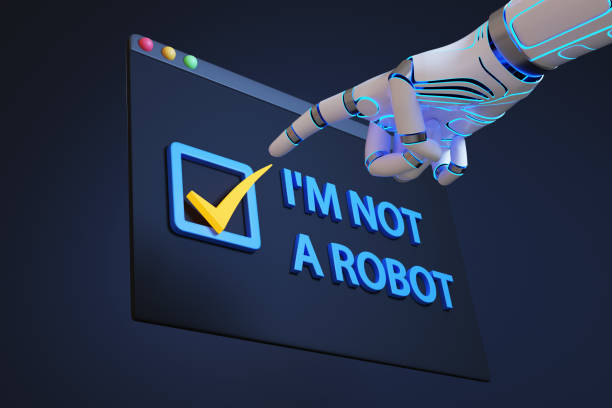
The term unCaptcha generally refers to tools, techniques, or systems designed to bypass, solve, or avoid CAPTCHA challenges on websites and digital platforms. CAPTCHA stands for “Completely Automated Public Turing test to tell Computers and Humans Apart,” and its purpose is to distinguish human users from automated bots. An unCaptcha solution operates in the opposite direction by attempting to automate the solving process or remove the need for manual verification. As a category, unCaptcha belongs primarily to the automation and web interaction technology domain, but it also intersects with cybersecurity, artificial intelligence, and ethical computing. While some uses of unCaptcha technology are legitimate, such as accessibility assistance and automated testing, others raise concerns about misuse, spam, and abuse of online services.
Understanding unCaptcha requires a deeper look into how CAPTCHAs work, why they exist, and why bypassing them has become a topic of interest for developers, researchers, and businesses. This article explores unCaptcha from multiple perspectives: technical, ethical, operational, and strategic. The goal is to provide a comprehensive, informative explanation without relying on external sources, focusing on original interpretation and conceptual analysis.
The Role of CAPTCHA in Modern Digital Environments
CAPTCHAs have become a standard security feature across the internet. They are used by websites to prevent automated scripts from creating fake accounts, posting spam, scraping content, or performing malicious actions. When a user tries to sign up for an account, submit a form, or log in repeatedly, the website may display a challenge that requires visual recognition, text interpretation, image selection, or simple logical reasoning. Humans can typically solve these tasks quickly, but bots struggle without advanced artificial intelligence.
However, as technology has evolved, so have the methods for solving CAPTCHAs. Machine learning and optical character recognition systems have improved significantly, making it possible for automated tools to recognize distorted text or identify images. This technological advancement has led to the development of unCaptcha solutions. Some of these solutions are used internally by organizations for testing and automation purposes, while others are designed to bypass security measures. The distinction between legitimate and illegitimate use is crucial in evaluating the role of unCaptcha systems.
How unCaptcha Systems Work Conceptually
An unCaptcha system typically functions by analyzing the challenge presented by a CAPTCHA and generating a response that satisfies the verification process. The exact mechanism can vary widely depending on the complexity of the CAPTCHA. Some systems rely on pattern recognition, while others integrate artificial intelligence models capable of interpreting images, audio, or interactive tasks.
In simpler scenarios, unCaptcha tools may use pre-trained models that recognize common patterns or characters. In more advanced cases, they may rely on cloud-based processing or human-assisted solving networks. The goal is always to complete the challenge automatically without requiring manual input from a user. This capability can be useful in controlled environments, such as software testing or accessibility applications, but it also has the potential to be misused.
Below is a conceptual table showing different types of CAPTCHA challenges and the general approaches unCaptcha systems might use:
| CAPTCHA Type | Typical Challenge Description | Conceptual unCaptcha Approach |
|---|---|---|
| Text-based CAPTCHA | Distorted letters and numbers | Pattern recognition and character analysis |
| Image selection | Identify objects in images | Image classification models |
| Audio CAPTCHA | Recognize spoken characters | Speech-to-text processing |
| Puzzle CAPTCHA | Drag-and-drop or logic tasks | Interaction simulation |
| Behavioral CAPTCHA | Analyze mouse or typing behavior | Behavioral pattern replication |
This table illustrates that unCaptcha is not a single technology but a broad category of methods designed to handle different verification challenges.
Legitimate Uses of unCaptcha Technology
Although the idea of bypassing CAPTCHAs often carries negative connotations, there are legitimate contexts where unCaptcha systems play a beneficial role. One of the most important applications is accessibility. Some users with visual impairments or cognitive difficulties may find CAPTCHAs challenging to solve. Automated tools can assist them by interpreting the challenge and providing a response, allowing them to access online services without barriers.
Another legitimate use is in software testing and development. Developers often need to test automated workflows that involve login forms, sign-up pages, or repeated submissions. CAPTCHAs can interfere with these processes, making it difficult to simulate user behavior. In such cases, unCaptcha tools are used within controlled environments to ensure that automated tests can run smoothly without compromising the security of the live system.
Additionally, organizations conducting research in artificial intelligence may use unCaptcha systems to evaluate how well machines can understand visual or auditory information. By attempting to solve CAPTCHAs, researchers can measure the progress of machine learning models and improve their accuracy.
Ethical Considerations and Risks
The use of unCaptcha systems raises significant ethical questions. While some applications are legitimate, others may enable spam, fraud, or unauthorized data collection. For example, bots that bypass CAPTCHAs can create thousands of fake accounts, flood websites with unwanted content, or scrape valuable data without permission. These actions can harm businesses and users by overwhelming systems and reducing trust in online platforms.
From an ethical perspective, the key issue is intent. If unCaptcha technology is used to improve accessibility or streamline testing, it can be considered beneficial. If it is used to exploit vulnerabilities or bypass security for malicious purposes, it becomes problematic. Organizations must carefully evaluate how they use such technology and ensure that it aligns with legal and ethical standards.
Technical Components of an unCaptcha System
An unCaptcha solution typically involves several components working together. While the exact structure can vary, the following elements are commonly involved:
| Component | Function Description |
|---|---|
| Input Processor | Captures the CAPTCHA challenge from the website |
| Analysis Engine | Interprets text, images, or audio using algorithms |
| Decision Module | Determines the most likely correct answer |
| Automation Script | Submits the answer back to the website |
| Feedback Mechanism | Learns from success or failure to improve accuracy |
These components form a workflow that allows the system to receive a challenge, process it, generate a solution, and submit a response. In advanced systems, machine learning models may continuously improve based on feedback, making the tool more effective over time.
The Relationship Between unCaptcha and Artificial Intelligence
Artificial intelligence plays a central role in the development of unCaptcha systems. Machine learning algorithms can be trained to recognize patterns in distorted text or identify objects in images. As AI technology improves, it becomes easier for automated tools to solve CAPTCHAs that were once considered secure.
However, this progress also leads to an ongoing cycle of innovation. As unCaptcha tools become more sophisticated, CAPTCHA systems must evolve to remain effective. Modern CAPTCHAs may incorporate behavioral analysis, such as tracking mouse movements or typing patterns, to detect whether a user is human. This constant evolution creates a technological arms race between verification systems and bypass tools.
Advantages and Disadvantages of unCaptcha Technology
To better understand the impact of unCaptcha systems, it is helpful to consider both their advantages and disadvantages.
| Advantages | Disadvantages |
|---|---|
| Improves accessibility for users with disabilities | Can enable spam and fraudulent activities |
| Helps developers test automated workflows | May undermine website security |
| Supports AI research and innovation | Raises ethical and legal concerns |
| Saves time in controlled automation environments | Can reduce trust in online platforms |
This comparison highlights the dual nature of unCaptcha technology. Its value depends largely on how it is used and the context in which it is applied.
Future Trends in Verification and Automation
As digital environments continue to evolve, the role of CAPTCHAs and unCaptcha systems will also change. Websites may adopt more sophisticated verification methods that rely on background analysis rather than visible challenges. For example, systems might evaluate user behavior, device characteristics, or interaction patterns to determine whether a visitor is human. These approaches aim to reduce friction for legitimate users while maintaining security.
At the same time, automation tools will continue to advance. Developers will seek ways to streamline workflows and improve accessibility without compromising safety. The challenge will be finding a balance between convenience and protection. Organizations must design systems that are secure but not overly restrictive, ensuring that legitimate users can access services without unnecessary obstacles.
Practical Considerations for Organizations
Organizations considering the use of unCaptcha technology should carefully evaluate their goals and responsibilities. They should ensure that any implementation complies with legal requirements and respects user privacy. If unCaptcha tools are used for testing or accessibility, they should be restricted to controlled environments and monitored closely.
It is also important to educate teams about the ethical implications of bypassing verification systems. Developers, security professionals, and business leaders should collaborate to create policies that guide responsible use. Transparency and accountability are essential in maintaining trust with users and stakeholders.
Conclusion
unCaptcha is a concept that sits at the intersection of automation, security, and ethics. It represents the technological capability to bypass or solve CAPTCHA challenges, but its significance extends beyond technical functionality. The category of unCaptcha includes tools and methods used for accessibility, testing, and research, as well as those that may be misused for malicious purposes. Understanding this dual nature is essential for anyone working in digital environments.
As technology continues to advance, the relationship between verification systems and automation tools will remain dynamic. CAPTCHAs will evolve to become more sophisticated, while unCaptcha solutions will adapt in response. The key challenge for organizations and developers is to use these technologies responsibly, ensuring that they support legitimate goals without undermining security or trust. By approaching unCaptcha with a balanced perspective, it is possible to harness its benefits while minimizing its risks.
FAQs
1. What category does unCaptcha belong to?
unCaptcha falls under automation technology, web interaction tools, and cybersecurity-related software that interacts with verification systems.
2. Is unCaptcha always used for harmful purposes?
No, it can be used legitimately for accessibility, testing, and research, though misuse can create security and ethical concerns.
3. How does unCaptcha differ from CAPTCHA?
CAPTCHA verifies human users, while unCaptcha refers to systems designed to solve or bypass those verification challenges.
4. Can unCaptcha technology improve accessibility?
Yes, it can assist users who have difficulty solving visual or audio challenges, making online services more accessible.
5. Why do websites continue to use CAPTCHAs?
They help prevent automated abuse, spam, and unauthorized access, protecting both users and online platforms.